
8 simple flows to get started with marketing automation
A marketing automation flow is a series of emails or text messages that are sent automatically when something happens, for example when someone signs up, clicks a link or a certain date arrives. Here are eight example flows, with the start, the steps and what you measure.
Marketing automation can sound abstract and technical, so much so that many people give up on the idea before they have tried a single flow. That is a shame, because a simple flow is often built in an afternoon and saves time every week after that.
The examples below suit companies, associations and the public sector, not just e-commerce. Each flow is described in the same way: what starts it, which steps it has, when it should stop, an example subject line and what you follow up. The timings are suggestions that you adapt to your organization. If you need help along the way, personal support is available by email and phone.

How a flow is built
All the flows in this guide are built from the same three parts:
- A start (trigger) that sets the flow off, for example that a contact signs up, clicks a link or that a certain date arrives.
- Steps that are sent one after the other, with waiting time in between: an email today, a text message in three days.
- Conditions that steer the path, for example that someone who has already signed up gets no more reminders.
Sketch the flow on paper before you build it, and start with just one. When it works, you build the next. More about how flows work is in the guide What is marketing automation?, and how you build them in Paloma on the page about marketing automation in Paloma.
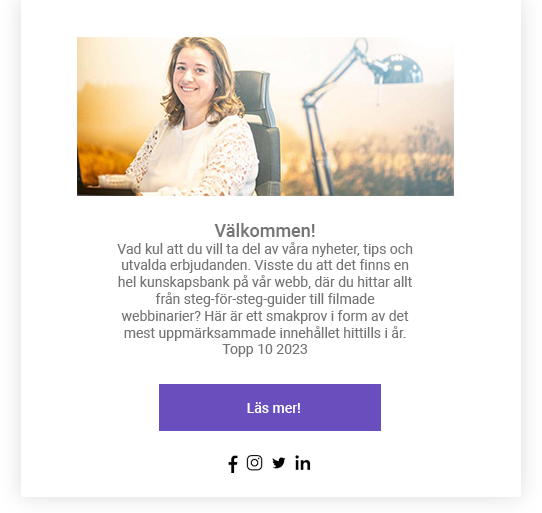
1. Welcome new contacts
Strike while the iron is hot. Someone who has just signed up is at their most interested, and a welcome email that arrives right away is opened more often than anything else you send.
- Start: a contact signs up for the newsletter or is added to the list.
- Steps: a welcome email right away, on day 3 the most read articles or a taste of what the newsletters usually contain, on day 7 an invitation to follow you on social media or to answer a question about what the recipient wants to read about.
- Condition: someone who has unsubscribed gets no more emails in the flow.
- Subject line: "Welcome! Here is what you can look forward to"
- Measure: opens and clicks on the welcome email, and how many unsubscribe in the first weeks.
More about what a good welcome email contains is in the guide to welcome emails.
2. Educate with a topic-based flow
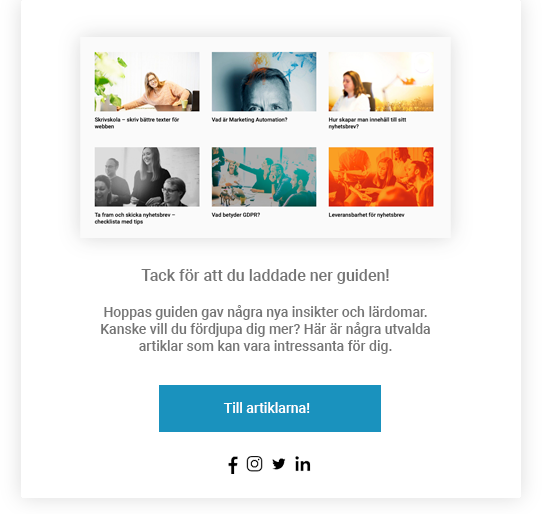
Let the download of a guide or checklist start a flow that keeps teaching about the same topic. It keeps the contact warm without you having to send anything by hand.
- Start: a contact downloads a guide via a form.
- Steps: the guide right away, on day 4 an in-depth tip, on day 10 a customer example or a question about what the recipient wants to know more about.
- Condition: split the flow by which link the recipient clicks, so that someone who shows interest in a topic gets more about just that.
- Subject line: "Three things to do after reading the guide"
- Measure: clicks per topic, and how many take the next step, for example book a meeting.
The flow is good for warming up leads, and can be combined with lead scoring so that the most interested end up with sales.
3. Follow up an expression of interest
Someone has expressed interest in a service, a course, a home or a membership. If you do not answer quickly, the interest has time to cool, and a flow makes sure nobody is forgotten.
- Start: a contact fills in a form for an expression of interest or a quote request.
- Steps: a confirmation right away with what happens now, on day 2 answers to the most common questions, on day 7 a reminder with a clear button to book a call or move forward.
- Condition: someone who has booked or been contacted is taken out of the flow.
- Subject line: "Thank you for your interest! Here is how it works"
- Measure: how many book or move forward, and how long it takes.
4. Send reminders before an event
More registered participants show up when they get a reminder, and fewer call to ask for the address. The flow suits everything from customer meetings and webinars to annual meetings and association activities.
- Start: a contact registers for the event.
- Steps: a confirmation right away, a reminder by email a week before, a short text message the day before with the time and place or link.
- Condition: someone who has cancelled gets no more reminders.
- Subject line: "See you tomorrow! Here is everything you need to know"
- Measure: the share of registered participants who come, and how many cancel in time.
Registration, participant lists and reminders can be handled in the same place with an event platform. More tips for the planning itself are in the event checklist.
5. Re-engage inactive contacts
Contacts who have not opened for a long time pull down deliverability and give misleading statistics. A flow gives them a chance to show that they want to stay.
- Start: a recurring schedule, for example every Monday, with the condition that the contact has not opened any send in 90 days.
- Steps: an email with your best content or an offer, on day 7 a direct question about whether they want to keep getting the sends, on day 14 a last email saying that they will be removed if they do not answer.
- Condition: someone who opens or clicks is taken out of the flow and is active again.
- Subject line: "Do you still want to hear from us?"
- Measure: how many become active again. Those who do not answer you remove from the list.
6. Remind about membership renewal
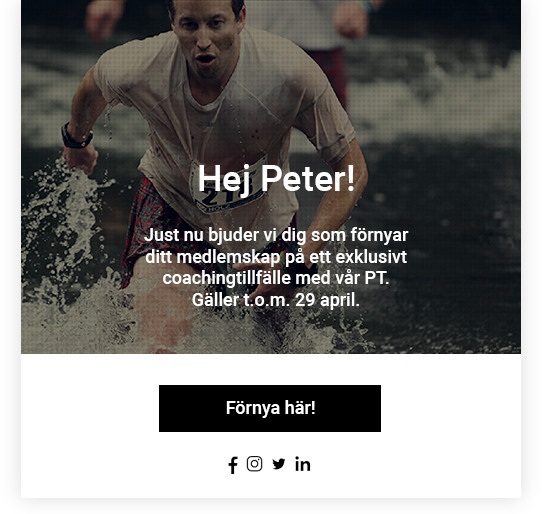
For associations and organizations, the membership fee is often the most important income. A flow takes care of the reminders so that the board does not have to chase members by hand.
- Start: a set date, for example a month before the membership fee is due.
- Steps: an email about the renewal and what the membership gives, two weeks later a reminder, and shortly before the last day a short text message.
- Condition: someone who has paid is moved to another list and gets no more reminders.
- Subject line: "Time to renew your membership"
- Measure: the share who renew before the last day, compared with the year before.
More tips for the association's sends are in the guide to newsletters for associations.
7. Follow up after a purchase, service or event
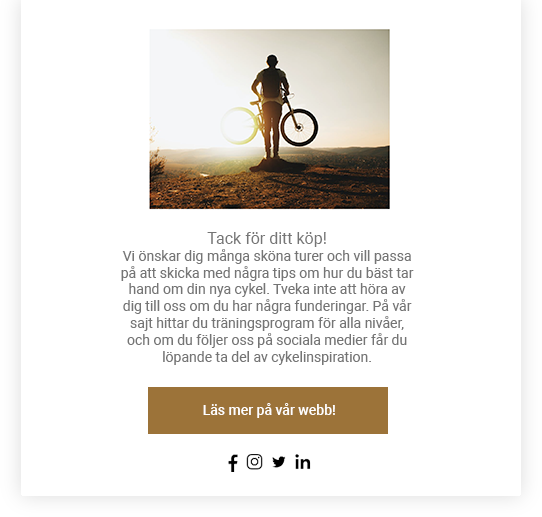
Do not abandon the customer or participant after the meeting. A follow-up shows that you care and gives you answers about what can be improved.
- Start: the customer or participant is added to a list after the purchase, service or event, or is sent in from your checkout or booking system.
- Steps: a thank-you right away with tips on how the product or service is used, on day 3 a question about how it went or a short survey, on day 14 an offer or an invitation to the next occasion.
- Condition: someone who answers the survey gets a thank-you instead of a reminder.
- Subject line: "Thank you! What did you think?"
- Measure: the response rate on the survey and how many come back.
The question about what the customer thought often works well as a text message.
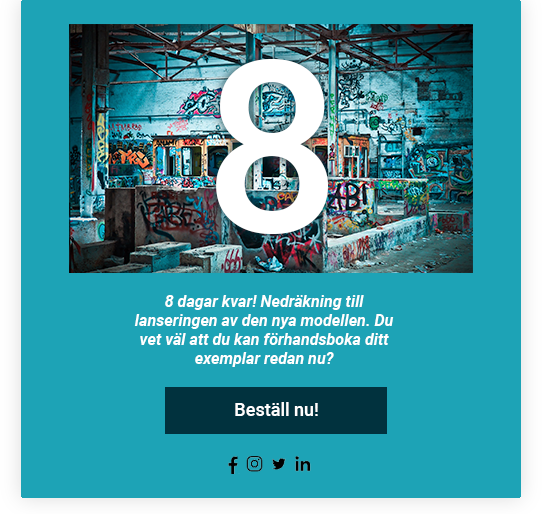
8. Launch something new
Are you launching a product, a service or a new operation? A flow builds anticipation in advance and makes sure everyone knows when it is time.
- Start: a set date, or that a contact expresses interest in the news.
- Steps: a week before a sneak peek, on the launch day the news itself, three days later a reminder about an offer that is valid for a limited time.
- Condition: someone who has bought or signed up gets a thank-you instead of the reminder.
- Subject line: "It is here"
- Measure: clicks on the launch email and how many buy or sign up while the offer lasts.
More flows to try
Once your first flows are running, there are more that are easy to build from the same parts.
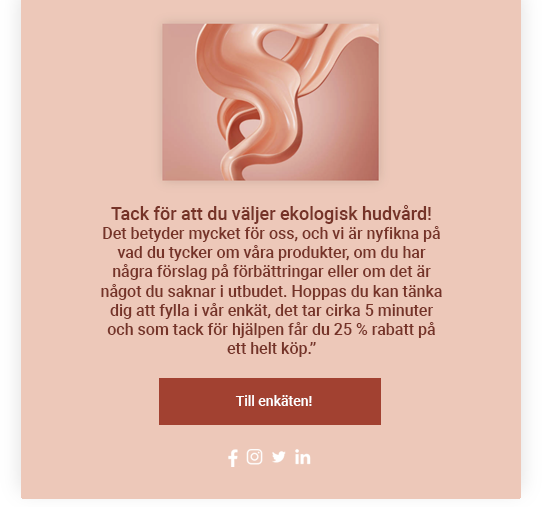
Ask for a recommendation. A few weeks after a purchase or an event, a flow can ask happy customers for a review, or to tell a colleague about you.
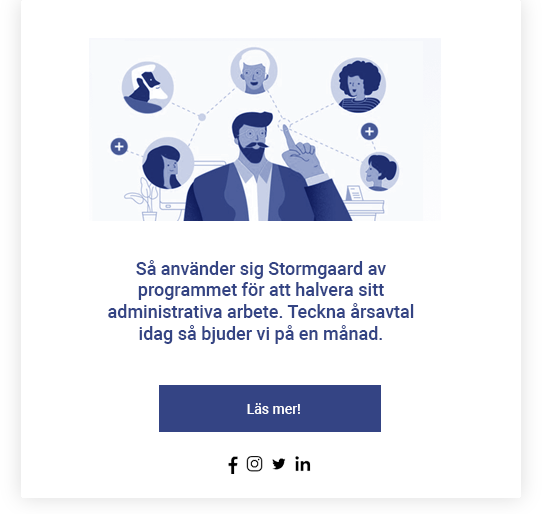
Reward loyal customers. Make them feel seen and appreciated: say thank you, ask what they think and give them something extra.
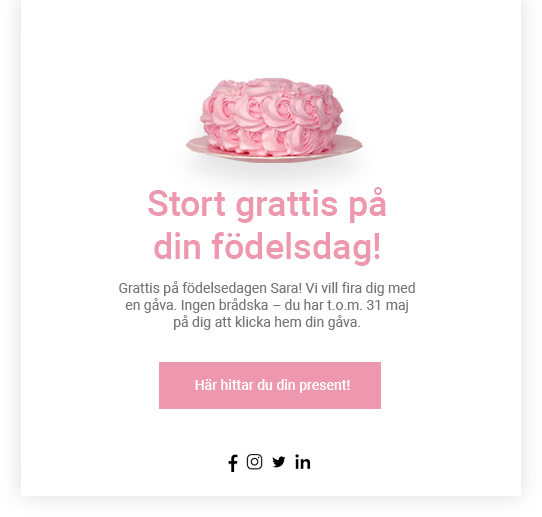
Celebrate birthdays and anniversaries. If the date is stored as a field on the contact, a flow can send congratulations on the right day, for example a text message with a personal offer.
Common questions about marketing automation flows
What is a marketing automation flow?
A series of emails or text messages that are sent automatically when something happens, for example that someone signs up or clicks a link. The flow consists of a start, steps with waiting time in between and conditions that steer who gets what.
Which flow is easiest to start with?
The welcome flow. It has a clear start, when someone signs up, and a clear purpose. It also gives results right away, because welcome emails are opened more often than ordinary sends.
How do you build a marketing automation flow?
Decide the goal, choose what should start the flow, sketch the steps and the waiting times, write the emails, test and start. In Paloma you build the flow in a visual editor with a start, conditions, actions and timers.
Can associations and small businesses use marketing automation?
Yes. The flows do not have to be advanced. A welcome greeting, event reminders and reminders about membership renewal save time in a small organization, because they run by themselves once they are built.
How do you know if a flow works?
Decide in advance what the flow should lead to, for example booked meetings, renewed memberships or more people showing up at the event. Follow that number, and also look at opens, clicks and unsubscribes for each step.
What our customers say

"Help is always close at hand!"
Maria Adeström, Skedvi Bröd

"Very easy to understand"
Maria Sehlström, The Absolut Company

"Awesome support!"
Emil Atak, Coompanion Mälardalen
Build your first flow in Paloma
Create a free account and let us know, and we will turn on automation. Newsletters, SMS, events and flows in the same system, free up to 250 sends a month.
Create a free account