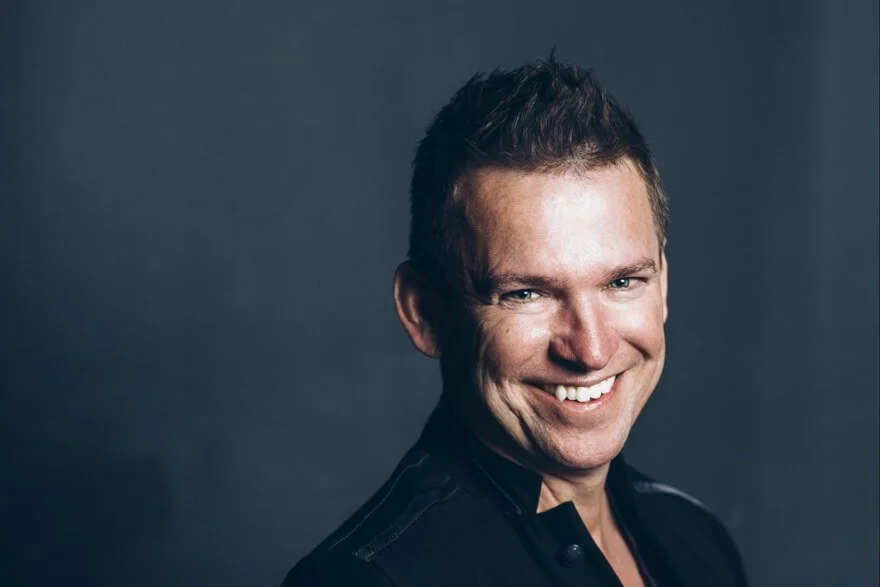
Micke Darmell on physical meetings
What role will physical meetings play in the future? We have talked to Micke Darmell about the connected society and the importance of physical meetings. He also shares practical tips for planning and leading an event that make a difference to the energy level.
The impulses of being connected
A lot becomes more superficial online, and everything goes faster. All social platforms exist to capture our attention, so that we stay there for as long as possible. They are also designed to make us respond on impulse – like, give an opinion, fire off short comments. These are not well-considered reactions.
Something Micke is careful to point out is that he is not against digitalization as such – who could be, he says. It is more about how we should relate to technology.
– Technology is neither good nor evil in itself; it is how we use it.
In many cases our relationships are affected in a positive way, and a lot becomes easier. But he also sees negative effects of the connected society. In the book ‘Uppkopplad eller Avkopplad’ (Connected or Disconnected), which came out in 2013, he focuses on how we and our relationships at work and at home are affected by being constantly connected. What do we need to navigate this new landscape? In this area, as well as in meeting culture, he is a much sought-after speaker.
The decisive space
The Austrian neurologist and psychiatrist Viktor Frankl, who survived four concentration camps, emphasizes in the book ‘Man’s Search for Meaning’ that we need meaning in life. Frankl discusses the space between stimulus and response, where we have the power to consciously choose freedom and happiness. In other words, it is about how we react to the different kinds of stimuli we encounter.
The space between stimulus and response widens as I develop. That is where we have our EQ, our creativity and wisdom; everything the robots do not have. When we are online, the space shrinks.
– Another tendency is that the harsh tone is starting to move over into real life. It makes you sick to your stomach to read about how pharmacy staff who are new to Sweden are treated. What happens to society in the long run when harsh words take up more and more space in real life? It is in physical meetings that we come into being. That is where we feel.
Empathy is something that develops through eye contact. When you treat someone badly and see the response, it is easier to come to an insight. Online, we do not see the other person get upset.
Physical meetings even more important in the future
Children in junior high school today have poorer social skills than those who were in middle school ten years ago. Micke becomes aware of this when he talks to principals and teachers. He also says that in the US, some of the most respected universities offer free courses in conversation for graduating students. Free! The purpose is for the students to be able to hold a conversation when they graduate. But half of them say no. According to the follow-up, all of them understand that it is good to be able to hold a conversation when you start working. They just do not dare to go, because in a conversation they cannot edit if they make a mistake.
– It is happening fast; this is not twenty or thirty years from now, this is now. Physical meetings will be even more important in the future, but very few people talk about it. Everyday meetings will also matter more, as a formative part of the business, for those who are entering working life now and cannot look each other in the eye or hold a conversation without looking down at their phones. As more meetings become virtual, everything that happens physically will become even more important.
He agrees that it is not only the youngest generations who are affected. Even among those of us who were fully grown when we first held a smartphone, that space has shrunk, for example.
Good relationships, the foundation of everything else
Micke often shows a small model when he speaks to management teams. The word efficiency at the top – a word that few get excited about and many are tired of. So what is efficiency? It is about coordinating. To coordinate, we need to be able to communicate. To communicate well, good relationships are a prerequisite. Start there, he urges: look at how good our relationships are.
If we humans get to feel joy, meaning and involvement, then we do our best. We want things to go well, we want to have fun with the people we work with, we want to be appreciated. That is how we humans work. But it is all too rare that people start at that end.
– If we are to create the good relationships that make us profitable and efficient in an organization, then we had better meet, then we had better spend time together, then we had better build teams. Nowadays kickoffs are supposed to be so efficient that people sneer at team-building activities. Not everything we did in the past was garbage or wasted money. Everything starts from the purpose.
Unlike the word efficiency, good relationships are something to get excited about.
– You might be surprised that we have not come further in organizations. The best growth for Sweden would be if all corporate groups and management teams could get a full day on how the brain works.
Do something together and make the most of it
A kickoff, like all meetings, should have a purpose based on the operational plan/business plan, and make sure we get where we want to go. Involvement is part of the purpose; everyone gets to take part in the thinking.
When we have everyone gathered at a kickoff, we have the chance to really tap into all the expertise. Then we take care of the material and do something with it, so that something happens afterwards. It must not become a one-off event that lights up like a sparkler only to disappear.
Micke's recommendation is to include in the preparations how the follow-up will be done. A good event formula is 40% work before, 20% during and 40% after.
Another recommendation is to always end meetings with feedback, above all on what we did well.
– We have so many systems with key figures and so on that only flash at the deviations. They do not tell you when things are going well. Also dig into what it was that made things go well. Put your finger on the success factors.
The physical meeting and the event are a good forum for creating a good feedback culture.
5 tools for energy & engagement
The following five tools make a difference for your event, according to the meeting evangelist – as Micke sometimes calls himself with a twinkle in his eye.
- Videos before the event
Aim: Anchor the purpose, create atmosphere and anticipation.
Make use of the good digital platforms available today and build anticipation. Send pre-recorded videos/video clips to the participants. End, for example, with ‘Hope to see you there’.
The more anticipation that is created beforehand, the more ready and receptive I am as a participant.
- A name for the meeting
Aim: Communicate focus and direction, create a feeling, make it enjoyable.
Choose a good name for the meeting that is connected to the meeting's purpose and goals. That makes it easier for the participants to contribute.
- Icebreaker
Aim: Open and set the tone, create atmosphere. Encourage what you want to see more of.
Here you can, for example, get people laughing and create an informal atmosphere where people dare to start talking right away. You can use music and slideshows. Or open with an exercise that highlights how differently we experience things, and open up for understanding and humility.
- Interludes
Aim: Break, close a block before the next block. Switch gears by clearing out or by opening up and recharging.
It is good to have interludes between the different program items/blocks. A professional moderator can take care of these interludes.
- Inspiring reflections
- Music quiz
- Creative exercise
- Mindfulness exercise.
- Energy mingle
Aim: Add energy and finish so that everyone leaves the meeting happier and more motivated.
Let the participants mingle and give each other positive feedback. It does not matter whether the feedback is big or small, but it should be positive. A good thing that is very easy to do.
Finally, Micke Darmell …
How did you and Pelle Fridell, the jazz musician you sometimes work with on stage, meet?
– It was eight or nine years ago on a beach in France. We were both on vacation and started talking, and it turned out that Pelle was a musician. I brought Pelle into an event. Sometimes organizers are a bit skeptical about musical elements in talks, but then they are amazed by the added value.
What is your next meeting and how do you feel about it?
Besides my talks, there is a sales meeting next Friday, where we also plan the logistics for the coming week. It is well run; Heléne Arvidsson, CEO of gr8 meetings, is in charge. It is fun to meet, and energizing!
Want to learn how to make a good survey? Read our survey guide!