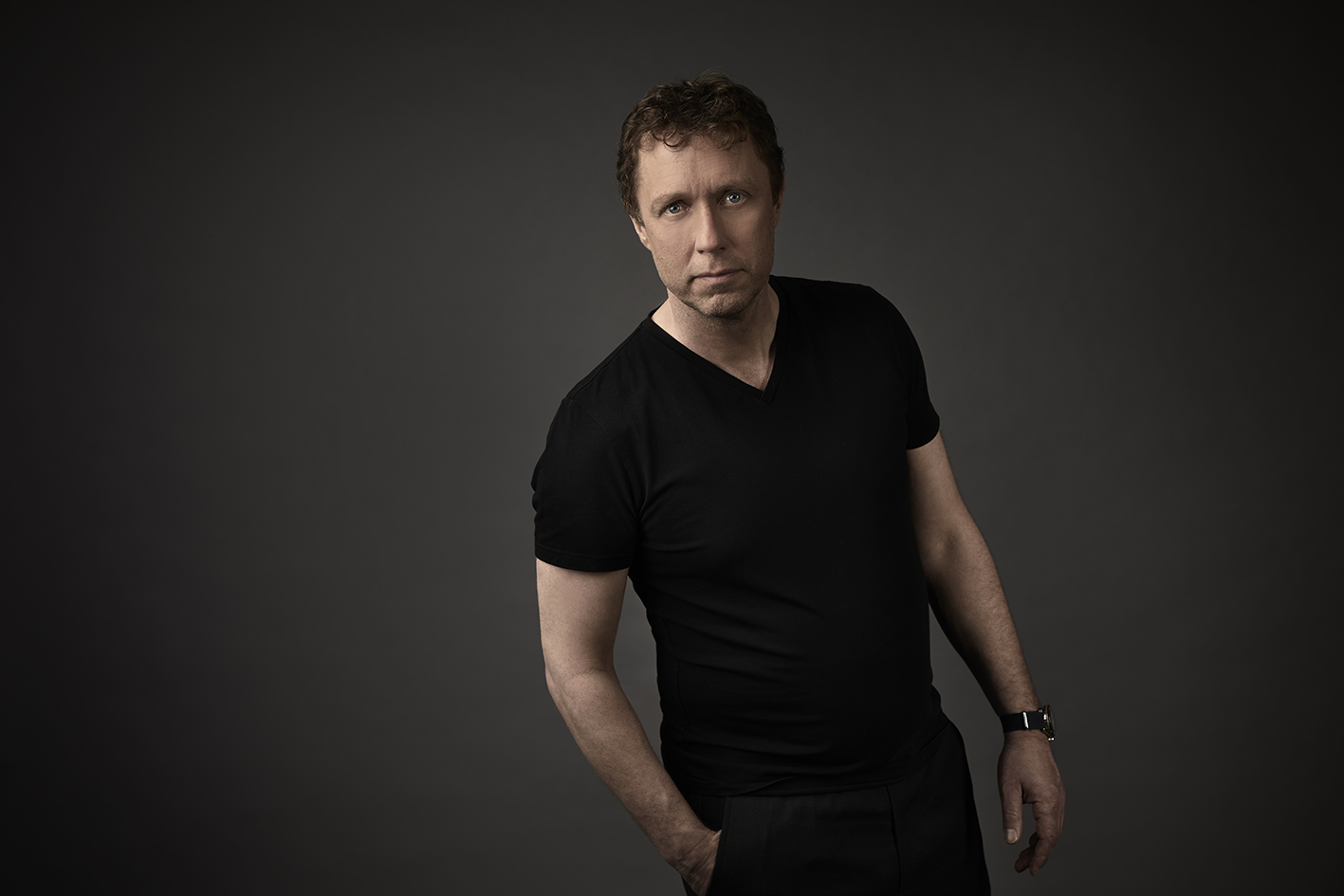
Klas Hallberg on serious making out at conferences
As a speaker, he is often one of the items on the program when people gather for a one- or two-day event. For the past 20 years, Klas Hallberg has therefore spent a lot of time at various conferences, and he has made quite a few observations.
– It is very common for people to hide behind seriousness, he notes.
Serious – take communication seriously
You do not have to be solemn to be serious. Klas thinks it is most unfortunate that dullness and solemnity are seen as synonymous with being serious. It can be unserious to be solemn.
Information overload is an all too common strategy when organizations communicate with employees and also customers. Everyone is given all the information, so that you have covered yourself.
– I see that as unserious. If I am a leader who is going to present something, I have to dare, in my role and with my competence, to pick out what really matters. And then communicate those points in a clear, simple and personal way to get through. THAT is serious, says Klas.
And then you can be solemn, or you can be funny. But that does not determine how serious you are.
Even though it has gotten better, he finds that there is still a complete overconfidence in information today. And in people's inclination and ability to extract what is valuable from large amounts of information on their own.
– I am completely fascinated. Once you gather people, take them out of productive working time so that they can meet… To then basically read aloud what is already on the intranet, that is a mystery to me. In 2019, every other conference is a complete PowerPoint festival, I do not get it, he exclaims.
Feeling & reflection or death by PowerPoint
It does not have to mean playing games, Klas points out. Of course you can have ordinary PowerPoint slides and graphs too, but then you should avoid cramming too much information onto them. Keep the focus on what matters. And if you want to create a feeling, choose a different picture than a graph.
– It is still a step forward that pictures of different kinds of mountains and people climbing different kinds of mountains have started to appear in presentations… And roads winding forward, he notes, visibly amused.
Even though he partly pokes fun at these pictures, he stresses that they are a step along the way when it comes to considering which feeling you want to evoke.
– On a scale of 1–10, the conference industry has gone from 2 to 3.5 during my 20 years, I think. So it is moving forward.
Sometimes it is not about a feeling but a reflection you want people to make. Then perhaps some kind of graphic illustration is in order, for example two contrasting clouds with a question mark in the middle. But what Klas sees is not people showing such a picture and talking about the core question from their own expertise. Instead, he often notes that the whole line of reasoning is written out on the PowerPoint slide and read aloud by the person on stage.
– A strange strategy, I think. Stop doing that right away and start thinking.
If you need inspiration, Klas recommends, for example, watching a video with Hans Rosling.
Making out – mutual risk-taking in the moment
So how do we get some making out going at the conference? Before the meeting, we should make sure to bring an important basic assumption with us: it is people who meet. Not information that needs to get out. Based on that, we can make decisions such as scheduling breaks that are long enough, so that we can then see how the whole is affected and the value grows.
– My mental image of making out when someone is on stage is a gospel choir. We take risks and fall into each other's laps if it goes wrong. We are human beings together, says Klas.
In a discussion about mutual risk-taking, he brings up the business expression skin in the game. It means that if only one party takes a risk, the quality of the business relationship gets worse and the situation more exposed. Klas applies the same principle to other kinds of relationships. If only one person takes emotional risks in a love relationship, the relationship is less equipped for hard times than if both take emotional risks.
– I think it is the same thing on stage. If the person communicating exposes themselves or is vulnerable in some way, that person will be perceived as more authentic and more credible. I see a very big opportunity here to develop meetings in general. Anyone who speaks in front of others, leads a meeting or is a manager – I think this is very important in leadership too – needs to dare to take risks, says Klas.
It is not about shooting from the hip
He describes conferences as traditionally set up so that the person on stage does not have to take any risks. There is a great deal of risk minimization going on, and it is time to start thinking from the other direction, Klas thinks.
– By that I do not mean that we should shoot from the hip and be cool. We should prepare, think through what we want to communicate, and communicate it clearly, simply and personally. And we should dare to take risks; that is the essence of making out, he sums up.
There are many different ways to take risks. One way is to expose your lack of knowledge: "you know what, I do not know how we are going to solve this challenge, here it is". Another is to dare to comment on something happening here and now. If a phone rings, for example, do something with it, like "I can take that". The meta-message when you take risks on stage is I feel safe, I can handle this.
A short checklist for the next conference
When it comes to concrete tips, we are aiming for a basic level. We will not get to the more advanced level, since the conference industry is not ready for it.
- Avoid information overload and dare to choose (For heaven's sake!)
- Let the visuals support what you communicate – stop reading aloud
- Communicate in a personal way to get through
- Dare to take risks in front of your listeners
Bursts of laughter, relevant angles & a rain of diamonds
As a speaker, he is known for bringing the house down with hearty laughter and creating engagement in the audience. Besides being awarded Stora Talarpriset and named Speaker of the Year several times, Klas Hallberg is ranked as one of the world's best speakers. It is the independent organization SpeakerRating.com that, among 5,000 ranked speakers, places Klas at the very highest level, Diamond Speaker. Only 8 other people in the world have reached this level.
Together with Magnus Kull, whom we interviewed earlier, he has published the trilogy Varför växer gräset (collected edition 2016). He has also published the series Hångla mer! (2015), which consists of the titles Hångla mer!, YCDBRALAI Arbeta mindre – få mer gjort and Hedra mysteriet – mindfulness på Värmländska.
Klas has also toured with acclaimed shows. The latest is Hela Sverige hånglar! – En filosofisk humorshow om att leva innan man dör. The tour continues with extra performances during 2019.
In addition, he regularly shares reflections as resident philosopher on Sveriges Radio, in the program P4 Extra.
Everything in this article may be wrong
The book Hångla mer! ends with the words Everything in this book may be wrong.
A closing line that is also an example of risk-taking, since some readers may take it the wrong way.
– I thought that might be the case, says Klas.
On this subject, he brings up the concept of beginner's mind – in the beginner's mind there are many possibilities, in the expert's there are few.
– If I, with my expertise and experience, remember to also have a beginner's mind, I will get the most out of my experience. But if I forget or cannot manage to have it, there is a risk that my competence and experience eventually become my own limitation instead of a resource.
An important basic attitude for Klas Hallberg is that these are my observations and this is how I have experienced it. You have not been given the truth. See it as suggestions, not evidence.
Everything in this article may be wrong.